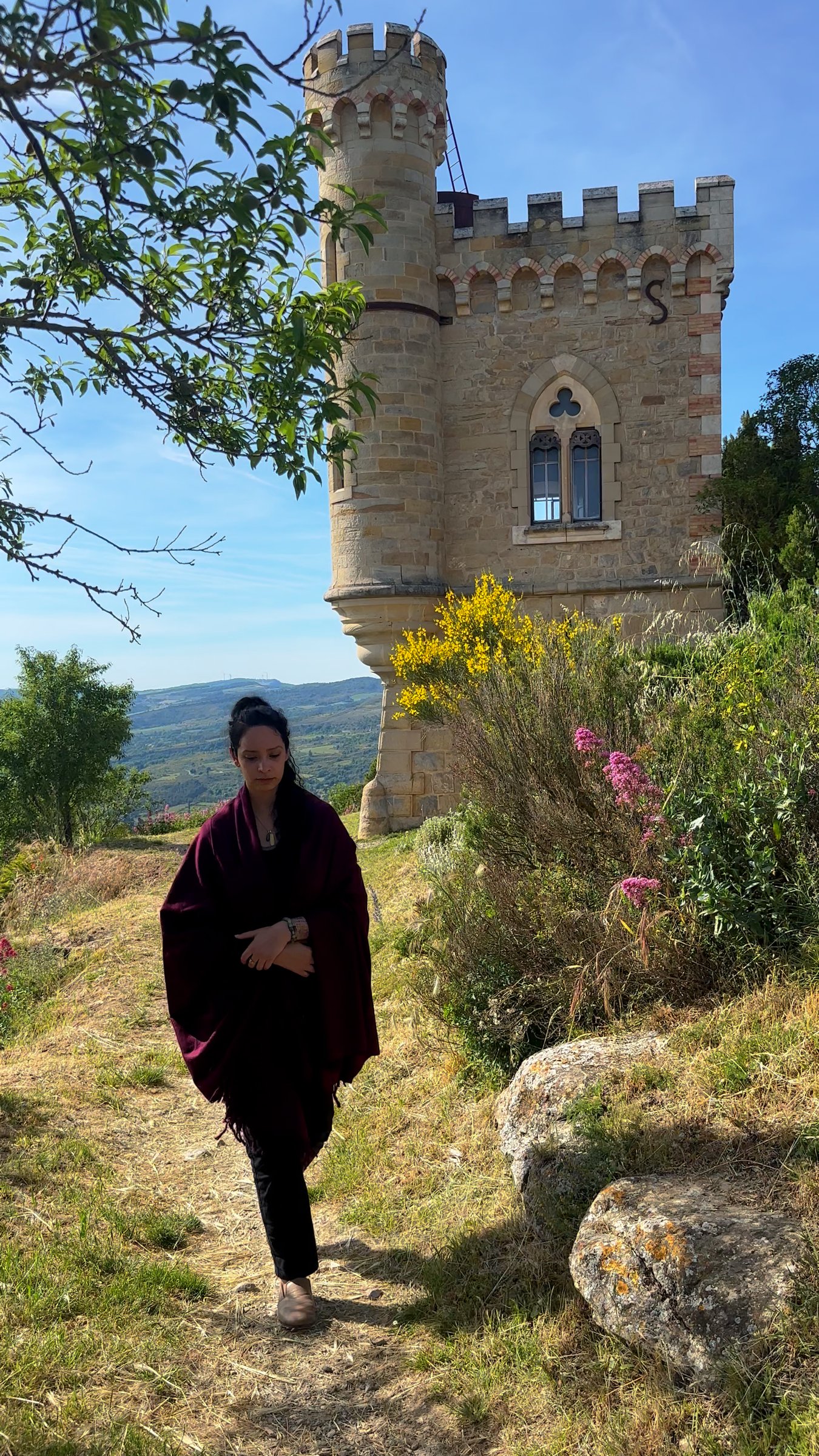
In college, I studied psychology. I still remember taking my first philosophy class and encountering the words Cogito, ergo sum: I think, therefore I am.
They stayed with me so deeply that I eventually had them tattooed on my body.
For me, they became less of a philosophical argument and more of a doorway into a question I would spend the next decade following:
Read the chapterClose the chapter
Psychology gave me one way of understanding the mind, but I wanted to understand the body too. I became fascinated by the nervous system and by the parts of human experience that were sensory, physiological, and embodied.
So I switched into biology and pre-med.
At the time, I thought I was going to become a doctor. I immersed myself in the sciences, earned my phlebotomy license, and began moving toward a future in medicine.
It didn't take long for me to realize that medicine wasn't where I wanted to stay.
I couldn't fully explain why yet. I only knew that I was interested in something beyond pathology and treatment. I was fascinated by human potential, particularly by the people who seemed to possess an innate desire to grow, test themselves, and become more capable versions of who they already were.
That curiosity led me into mental resilience, athletic performance, and sports medicine. I became fascinated by the relationship between psychology, physiology, recovery, performance, and the nervous system.
And then the inquiry expanded again.
My interest in the nervous system led me into breathwork and meditation, which eventually brought me to the Silva Method, one of the earliest doorways into my spiritual awakening. From there came other modalities, traditions, philosophies, and ways of understanding consciousness.
I didn't know it then, but I had begun what would become more than a decade of inquiry into human capacity.
For years, I collected notes, observations, frameworks, and philosophical reflections around these questions, most of which I kept private while I lived them.
But much of what I came to understand didn't come from studying people in theory.
It came from working with them.
I came into mentorship through transformation, not tactics.
I'm a NASM Master Trainer with specializations in senior fitness and corrective exercise, so much of my work was with people in pain, people rebuilding after injury or limitation, and people at stages of life where a poorly designed program could genuinely cost them.
You don't get to guess with those bodies.
You assess first.
Every time.
That habit became the foundation of how I understand transformation.
The body is the template.
It holds a record of what someone has been carrying. It compensates. It adapts. It protects. And often, it reveals what is happening long before a person has language for it.
So I learned to read what was there before deciding what needed to change.
Across more than a decade of fitness, performance training, mentorship, and human potential work, I kept encountering the same truth:
People rarely struggle because they lack information.
More often, there is a gap between what they consciously want and what their identity, nervous system, and subconscious patterns currently know how to hold.
That gap became one of the central questions of my work.